


Cooking With The Whole Pig’s Head


I was feeling adventurous when at the butcher and I bought the whole pig’s head. It was huge and must have weighted at least 20 pounds. I got it for a reasonable price considering its size and found out a couple of ways to prepare it, including a very simple one: head cheese.
Head cheese has been around for a long time and it an old favorite, but as actually nothing to do with cheese. You basically boil the whole head then pick the cooked meat in a container and continue making a stock with only the skull. Once the stock is ready, you pour some of the liquid over the cooked pork meat and refrigerate so the gelatin in the stock gets firm and you get this kind of meat jelly that we call head cheese. Head cheese can be made with the head of other animals, but pork is the most popular. You have to keep in mind that you’ll need a large pot to be able to fit the whole head.
It turns out my biggest pot wasn’t big enough for the head and ended up making a complete different recipe, for which I included an excellent video from Chris Cosentino, who is well known all over the world for his specialty: offal cooking.
First here is the very simple recipe to make head cheese. You can optionally cut the ears before boiling the head and bake them to make crispy pig’s ears.
Ingredients
- A whole pig head;
- 5 or 6 garlic cloves;
- Optionally, some vegetables cut in large cubes to flavor the stock (carrots, leeks, onions and celery are all good options);
- 2 bay leaves;
- Salt and pepper to taste (optional).
Technique
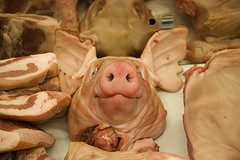 Place the whole head in a large pot and cover with cold water.
- Add the aromatic vegetables, crushed garlic cloves, salt and pepper and bay leaves. Since the stock will be part of the final dish, it’s important to give it some taste with either aromatic vegetables or spices or both.
- Slowly bring to a boil then reduce to a simmer and let simmer until the meat is fork tender (about 3 hours).
- Remove the head from the water, wait until the meat can be picked without burning yourself and then pick the meat in small pieces and place in a shallow contained.
- Put the skull back in the hot water and simmer for another 6 to 24 hours. The longer you go, the more will be extracted from the bones and the more gelatinous it will get when cooled.
- Once the stock is done, pour some over the cooked pork meat, just enough to cover.
- Place the container in the refrigerator and let it cool.
- Enjoy your lovely homemade head cheese!
Here is another way to prepare a pig’s head presented by Chris Cosentino. You should off seen my kitchen as I was preparing that one, it looked like a scene from an horror movie. If you prepare this in front of a vegetarian, he or she’ll probably be having nightmares for a whole week.
P.S. Have a look at the Paleo Recipe Book. It's a cookbook I've created to help you cook the best Paleo food. It contains more than 350 recipes and covers everything you'll ever need.

↓


- Over 350 easy recipes divided into 18 food categories. Enough options to cover everything you will ever need.
- 100% Paleo aproved: No grains, no dairy, no legumes, no sugar, no vegetable oils and no preservatives.
- Cooking guides and charts to help you cook just about anything.









Articles and information on this website may not be copied, reprinted, or redistributed without written permission.
All material on this website is provided for your information only and may not be construed as medical advice or instruction. No action or inaction should be taken based solely on the contents of this information; instead, readers should consult appropriate health professionals on any matter relating to their health and well-being.
The information and opinions expressed here are believed to be accurate, based on the best judgement available to the author, and readers who fail to consult with appropriate health authorities assume the risk of any injuries or health issues.