

Coconut Tapioca Pudding


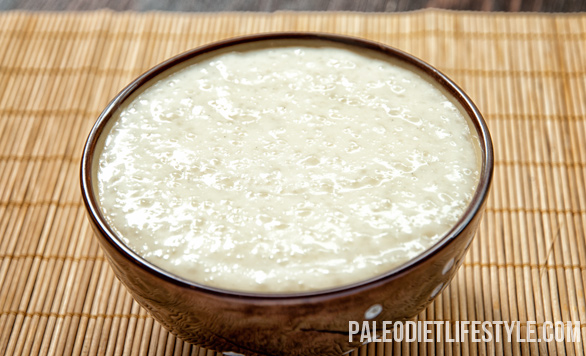
A well-loved dessert all around the world, tapioca pudding is one “treat” that’s easily made Paleo, because when you take out the sugar and milk, it’s actually not unhealthy! Tapioca is a safe starch, and actually quite a good choice of carbohydrate: it’s mostly glucose (starch), without a lot of fructose (sugar). Nutritionally, it’s not much to speak of, but it doesn’t do any harm either, so it’s perfectly fine to eat as an addition to a nutritious diet.
In this dessert, the tapioca pearls add texture and flavor to a coconut milk pudding. The key to making the “pudding” part of the recipe work is patience. With the egg yolks and the coconut milk, you’re creating a thick mixture called a custard, which gives the pudding its thick, creamy texture. Take it slow and steady, and you’ll be rewarded with a melt-in-your-mouth dessert. But if you heat up the eggs too fast, you’ll end up with scrambled eggs in your pudding! There’s no such thing as “too slow;” pick a time when aren’t in a rush, so all your efforts won’t be wasted with a disappointing result.
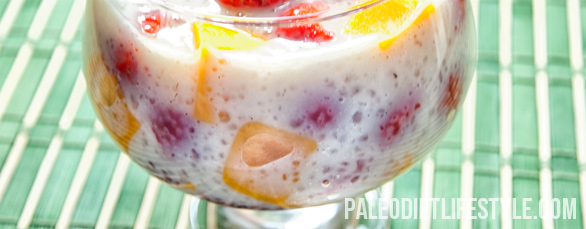
Once your pudding is ready to go, the fun part begins. Tapioca and coconut milk make a delicious “base” that you can jazz up with any kind of fresh ingredients you like. Add strawberries, mangos, lime zest or juice…whatever tickles your fancy. The coconut lends itself well to a “tropical” theme, but you could also experiment with cocoa powder or more savory additions if you’re looking for something different. Tweak it to match your dinner theme, or just add whatever you think is tastiest.
Coconut Tapioca Pudding Recipe
Serves 6
Prep Time: 20 min.
Cooking Time: 35 min
Ingredients
- ½ cup small tapioca pearls;
- 2 1/2 cups + one 14 oz. can of coconut milk;
- 1 vanilla bean;
- 2 large egg yolks;
- 3 tbsp. raw honey; (optional)
Preparation
- In a large saucepan placed over a medium heat, combine the tapioca, the 2-½ cups of coconut milk, and the vanilla bean.
- Bring to a simmer over a moderate heat and cook, whisking occasionally, until the tapioca is translucent and tender (about 20 minutes). Whisk in the remaining coconut milk.
- In a small bowl, whisk the egg yolks with the honey (if using) until smooth. Pour in about ½ cup of the hot coconut very slowly while continuing to whisk the entire time. Make sure to take your time with this step, otherwise you’ll end up with scrambled eggs! Then pour the egg/coconut mixture back into the saucepan, stirring constantly, and keep stirring for about 5 minutes.
- Refrigerate the pudding until solid, and serve chilled.
P.S. Have a look at the Paleo Recipe Book. It's a cookbook I've created to help you cook the best Paleo food. It contains more than 350 recipes and covers everything you'll ever need.
↓


- Over 350 easy recipes divided into 18 food categories. Enough options to cover everything you will ever need.
- 100% Paleo aproved: No grains, no dairy, no legumes, no sugar, no vegetable oils and no preservatives.
- Cooking guides and charts to help you cook just about anything.






Articles and information on this website may not be copied, reprinted, or redistributed without written permission.
All material on this website is provided for your information only and may not be construed as medical advice or instruction. No action or inaction should be taken based solely on the contents of this information; instead, readers should consult appropriate health professionals on any matter relating to their health and well-being.
The information and opinions expressed here are believed to be accurate, based on the best judgement available to the author, and readers who fail to consult with appropriate health authorities assume the risk of any injuries or health issues.